
Soil Moisture Meter is designed based on the dielectric constant principle, enabling the rapid determination of soil moisture content. The device features a measurement range of 0% to 100%, achieving an accuracy of ±3% under loamy soil conditions with a resolution of 0.01%. Its integrated structural design facilitates the collection of soil parameters at multiple locations and varying depths, making it widely applicable in fields such as agricultural irrigation guidance, forestry moisture monitoring, and environmental science research.
Soil Moisture Meter is a portable detection device developed based on the dielectric constant principle, featuring an integrated design capable of rapidly measuring volumetric water content in soil. The device primarily measures soil moisture content, covering a range from 0% to 100%, with a measurement accuracy of ±3% under loamy soil conditions and a resolution of 0.01%. It should be noted that for soils with high organic matter content (soil organic carbon > 12%) or high clay content (clay content > 45%), specific calibration tailored to the soil type may be required during measurement to ensure data accuracy, due to their unique dielectric relaxation characteristics.
The device's operating principle is based on the correlation between the soil's dielectric constant and its water content. High-frequency electromagnetic waves are emitted from the sensor probe into the soil medium; since the dielectric constant of water is significantly higher than that of air and soil particles, changes in soil moisture content induce a distinct change in the overall dielectric constant. By detecting this variation, the volumetric soil moisture content can be calculated. This measurement method bypasses the cumbersome procedures—such as sampling, drying, and weighing—required by traditional oven-drying methods, allowing for the rapid acquisition of data directly in the field.
In terms of application, Soil Moisture Meter primarily supports decision-making for precision agriculture irrigation. By understanding the actual moisture status of soil at different depths across various plots, farmers can scientifically determine optimal irrigation timing and water volumes, thereby preventing water waste and mitigating soil salinization issues caused by over-irrigation. In the forestry sector, the device is used to assess soil moisture availability within the root zone, guiding the cultivation of seedlings and the water management of commercial forests. In the realm of environmental monitoring, soil moisture data can be utilized to analyze regional drought trends, evaluate the water-carrying capacity of ecosystems, and investigate the interrelationships between soil moisture and vegetation growth.
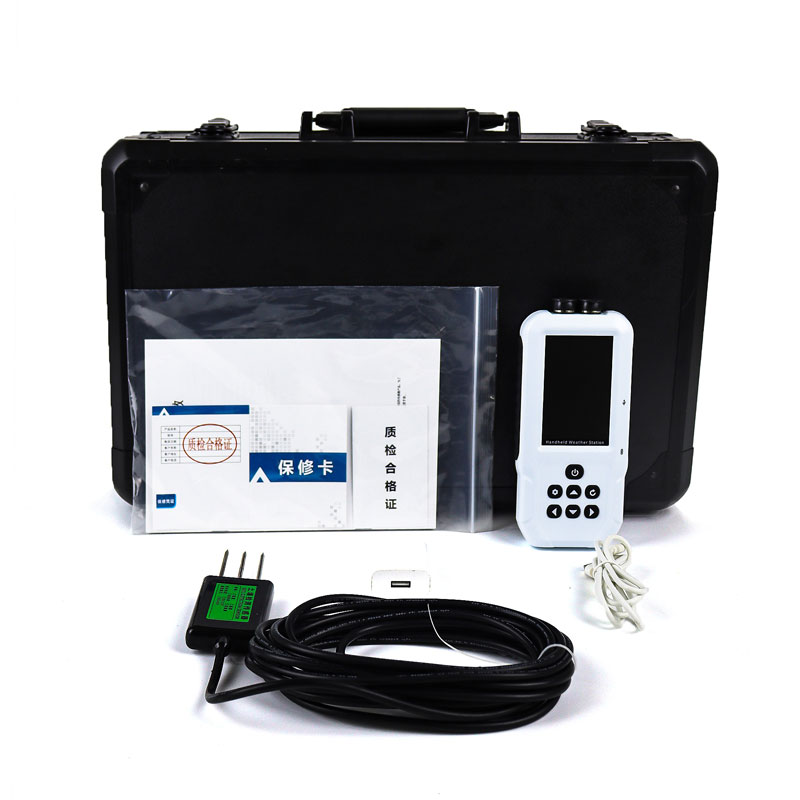
The device's design prioritizes convenience and ease of use for field operations. The main unit typically features a handheld design, equipped with an LCD screen for real-time display of measurement values and a built-in memory chip capable of recording multiple data entries. Certain models support GPS positioning capabilities, automatically recording the geographic coordinates of sampling points to facilitate subsequent mapping and analysis. To address the need for multi-depth measurements, users may select extension rods of various lengths or embed sensor probes within specific soil layers to conduct long-term, fixed-point monitoring.
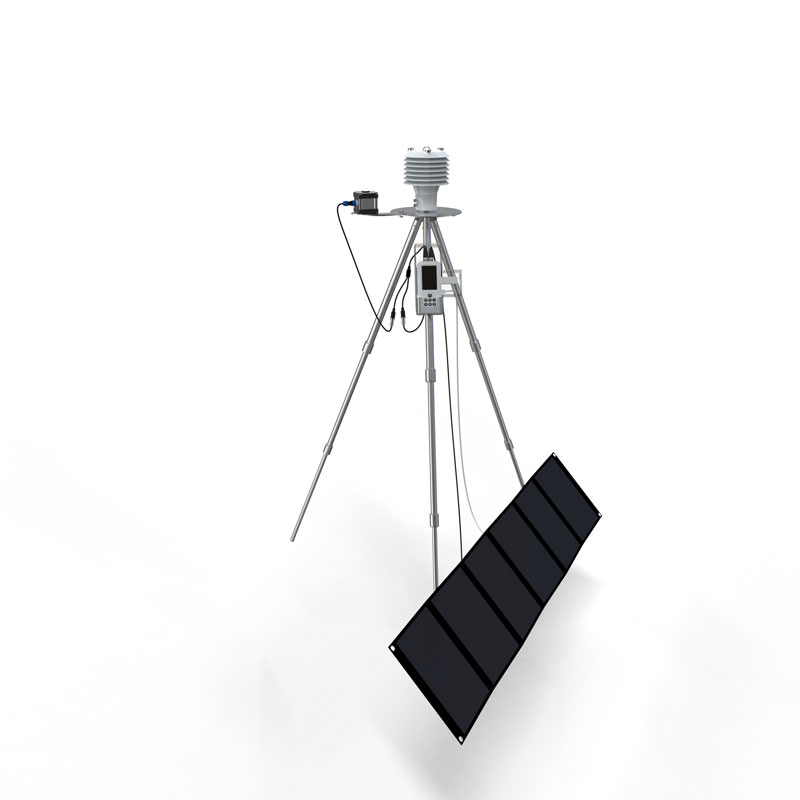
In terms of data management, modern Soil Moisture Meter devices typically feature Bluetooth or USB interfaces, allowing measurement data to be exported to a computer or mobile application for storage and analysis. The accompanying software supports functions such as data curve plotting, historical data comparison, and irrigation decision support. For fixed monitoring sites requiring continuous long-term surveillance, tubular soil moisture sensors can be deployed to conduct continuous, multi-layer observations of soil moisture levels, automatically uploading the data to a cloud-based platform via 4G or GPRS networks.
Soil moisture monitoring is of paramount importance for understanding water cycles in farmland, guiding water-saving agricultural practices, and providing early warnings regarding the onset and progression of drought conditions. Through the widespread adoption of rapid soil moisture testers, agricultural operators and administrative authorities can gain a comprehensive understanding of the spatial distribution and temporal dynamics of soil moisture, thereby establishing a robust data foundation for scientific decision-making.
This paper addresses:https://fengtusz.com/industry/956.html