The instrument for detecting soil moisture content utilizes the FDR (Frequency Domain Reflectometry) principle and an integrated structural design. It can quickly measure soil moisture content and temperature, suitable for real-time detection at multiple locations and long-term continuous monitoring. Its built-in large-capacity memory supports data storage of tens of millions of records.
This instrument is a specialized device for measuring the moisture content of soil. It uses the FDR principle, emitting electromagnetic waves through a probe to detect changes in the soil's dielectric constant, thereby quickly calculating the volumetric water content. The electromagnetic waves travel along the probe to the bottom and return, detecting changes in the voltage output of the probe. Since the soil's dielectric constant is primarily determined by its moisture content, this allows for accurate conversion of moisture data. The soil moisture content measurement range covers 0 to 100%, with an accuracy of ±3% in loam soils. However, it should be noted that soils with high organic matter and high clay content may require separate calibration for specific soil types to obtain more accurate results due to their dielectric relaxation characteristics.
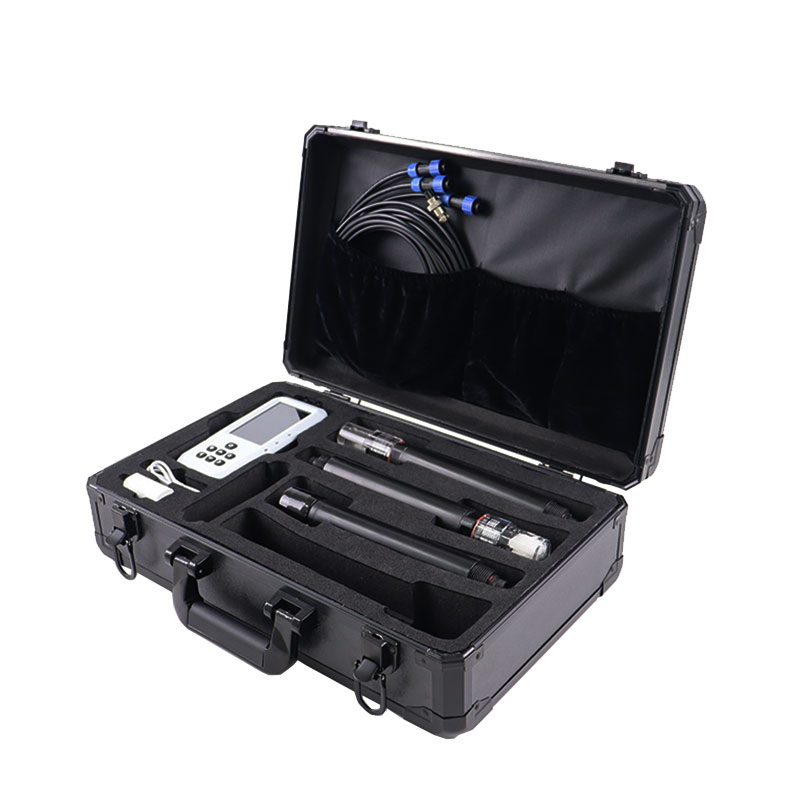
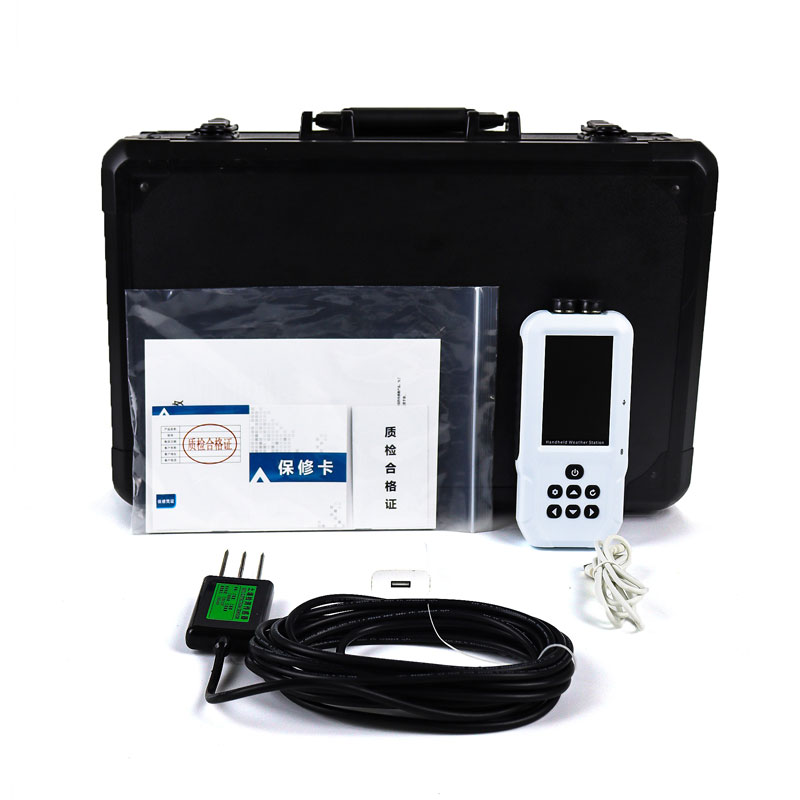
This instrument features an integrated design, combining an LCD display, sensors, and a portable carrying case into a compact form factor for easy fieldwork. It offers both manual and automatic recording modes, with users able to set the sampling interval in automatic mode. The built-in large-capacity memory supports up to 10 million data entries and includes power-off data protection to ensure data security and integrity. Users can export stored data to a computer via USB to generate Excel spreadsheets and plot data curves for further statistical analysis and long-term trend assessment. Some models can also be equipped with 4G connectivity to wirelessly upload historical data to a cloud agriculture platform for centralized management and remote analysis.
In terms of application scenarios, this soil moisture meter can rapidly detect and continuously monitor soil moisture content at different locations and depths. The sensor probe supports both plug-and-play field testing and long-term buried observation. The instrument is widely used in soil moisture monitoring, water-saving irrigation for dryland farming, precision agriculture, forestry, geological exploration, plant cultivation, water conservancy, and environmental protection. With its GPS positioning function, users can understand the distribution of soil moisture in different areas, providing a scientific basis for differentiated water-saving irrigation. The instrument also measures soil temperature, simultaneously acquiring information on soil hydrothermal conditions to meet the needs of scientific research, production, and teaching.
This paper addresses:https://fengtusz.com/industry/988.html