
Locust capture methods primarily refer to the use of light and sex traps, combined with automatic photography and machine vision recognition, to achieve online monitoring of locust populations. This technology can automatically analyze population density and instar, providing data support for locust monitoring in forestry and grassland areas.
Modern locust monitoring has evolved into an automated technology integrating light traps, sex traps, machine vision, and the Internet of Things. Its core objective is to achieve precise, continuous, and unmanned monitoring of locust population dynamics, providing a basis for scientific control decisions.
The monitoring equipment mainly captures target insects through two specific attraction methods. One method uses locust-specific attractants, releasing synthetically produced pheromones to lure specific species of male adults. The second method employs dual-light attraction technology, typically combining ultraviolet and visible light of specific wavelengths, utilizing the locusts' phototaxis for attraction. The two light sources can be automatically switched at preset times to adapt to the activity habits of different locust species or at different times, improving attraction efficiency.
The capture device integrates a high-definition camera unit and an image processing system. Once the attracted insects fall into the collection area, the device automatically takes pictures at set time intervals or under trigger conditions. The built-in machine vision algorithm then analyzes the images. Based on extensive sample training, the algorithm can automatically identify common locust species in the images and further analyze and count their numbers to preliminarily determine the age structure of the population.
All identification results and raw image data are transmitted in real time to a remote data center via a built-in IoT communication module (such as 4G/NB-IoT). Monitoring personnel can view real-time data and historical change curves for each monitoring point through a cloud platform to understand the spatial distribution and temporal dynamics of the locust population. Based on IoT technology, the platform can manage a large number of dispersed monitoring points, achieving regional network monitoring.
The core value of this automated monitoring technology lies in transforming traditional manual field surveys into a continuous, objective data stream. Through long-term accumulation, a population occurrence pattern model can be established, allowing for earlier detection of abnormal population growth and early warning of potential disaster risks. The data is more continuous and comparable than manual sampling surveys, helping to evaluate control effectiveness and optimize the timing and scope of pesticide application.
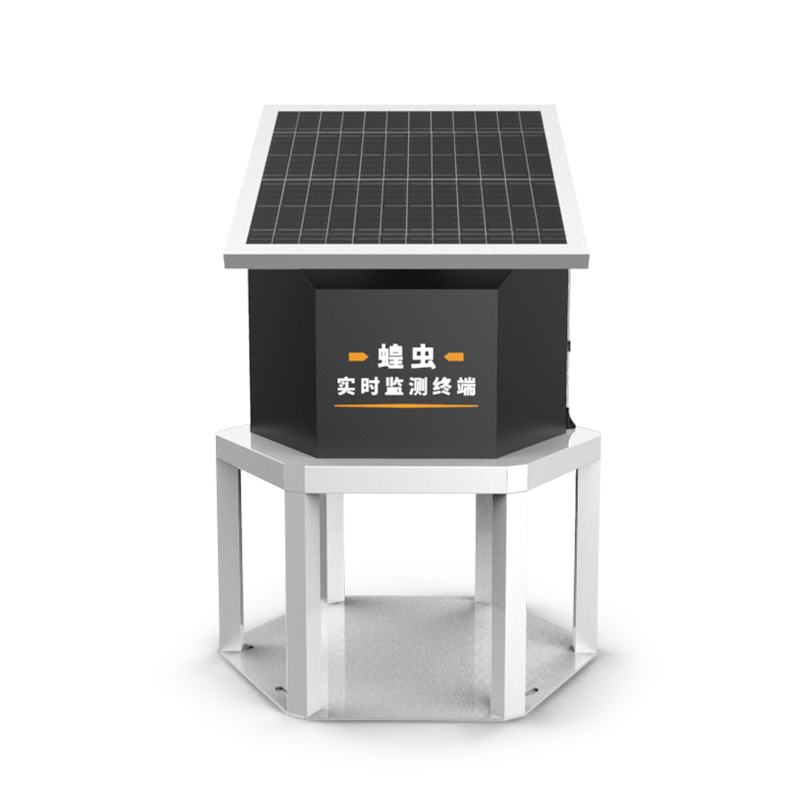
This technology system typically includes a power supply unit (such as solar panels and batteries) and a protective casing to ensure long-term stable operation in complex outdoor environments such as farmland, grasslands, and forests. Deployment requires scientific selection of site locations and densities based on local dominant locust species, geographical environment, and monitoring objectives.
In summary, the locust monitoring method integrating light-attracting, pheromone-attracting, and automatic identification technologies represents a shift in pest monitoring from manual to intelligent methods, and from discrete point-based surveys to networked real-time sensing. By providing accurate population dynamic data, it significantly improves the timeliness and scientific rigor of locust monitoring and early warning, and is an important technological component of the modern green pest control system for agriculture, forestry, and animal husbandry.
This paper addresses:https://fengtusz.com/technical/939.html