
Agricultural monitoring equipment integrates tubular soil moisture sensors, insect monitoring lamps, weather stations, and video surveillance systems to provide early warning management for four key agricultural conditions: soil moisture, crop growth status, pest infestations, and potential disasters. Data is uploaded to a cloud platform via GPRS or 4G networks, enabling remote viewing and trend analysis. This system is suitable for use in open fields, protected cultivation facilities, and orchards.
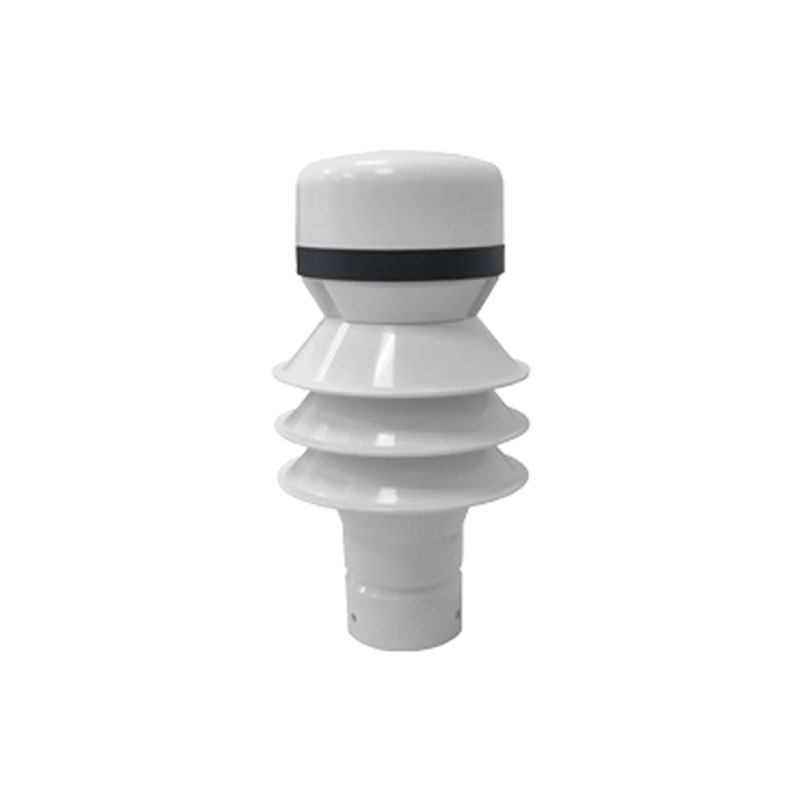
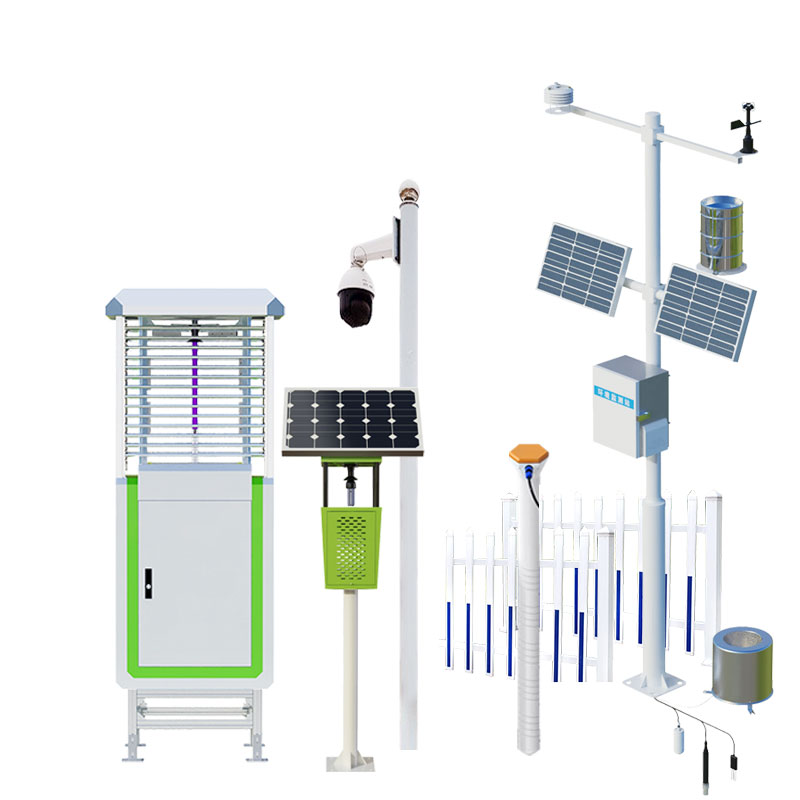
Agricultural monitoring equipment is an integrated monitoring and early warning system specifically designed to address the "Four Conditions" of agriculture: soil moisture, crop growth, pest activity, and disaster risks. The complete system comprises tubular soil moisture monitors, insect monitoring lamps, weather stations, video surveillance cameras, perimeter fencing, wind-suction insecticidal lamps, and a cloud-based platform. Together, these components cover all critical data acquisition stages required for monitoring crop growth and field environmental conditions. The tubular soil moisture monitors capture temperature and moisture data at various soil depths; the insect monitoring lamps utilize trapping mechanisms and image recognition technology to dynamically track the species and populations of pests; the weather stations collect environmental parameters such as air temperature, humidity, rainfall, light intensity, CO2 concentration, wind speed, and wind direction; and the video surveillance system provides visual imagery offering an intuitive overview of crop growth status.
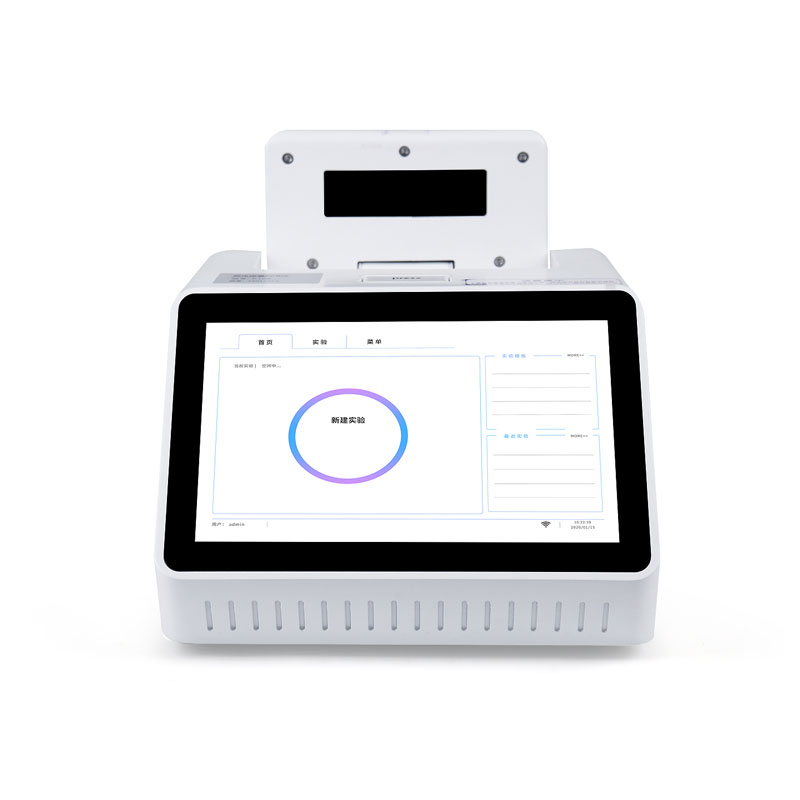
All monitoring data is uploaded to a central monitoring and forecasting platform via GPRS, 4G, or Ethernet connections. Authorized personnel can log in to the cloud platform to remotely view real-time environmental parameters and analyze their changing trends. The system features an automated early warning function that triggers alerts whenever soil moisture levels, pest populations, or meteorological conditions exceed pre-configured thresholds. This enables managers to stay fully informed about field conditions without the need for frequent on-site inspections. Compared to traditional manual field patrols, this automated approach significantly reduces labor costs while simultaneously enhancing the continuity and accuracy of data acquisition.
In terms of functional application, Agricultural monitoring equipment goes beyond mere data collection to provide comprehensive management and decision-support capabilities. Users can leverage historical data to conduct comparative analyses of soil moisture fluctuations within a specific plot across different growth stages, thereby determining the optimal timing for irrigation. By analyzing pest population curves generated by the insect monitoring lamps, users can effectively evaluate the efficacy of pest control measures. Furthermore, the integration of weather station data with video imagery aids in identifying specific meteorological conditions that precede potential disasters, thereby creating a critical time window for implementing proactive disaster prevention and mitigation strategies. As a complementary device, the wind-suction insect trap facilitates the physical control of certain pests alongside monitoring activities, thereby reducing the reliance on chemical pesticides.
Agricultural monitoring equipment establishes a comprehensive agricultural management system by leveraging IoT sensors, monitoring equipment, and an intelligent analytics platform. Thanks to its modular configuration, users can select and install various components—such as tubular soil moisture sensors, weather stations, or pest monitoring lamps—based on their specific operational needs. This adaptability makes the system suitable for a wide range of agricultural production models, including open-field cultivation, facility-based agriculture, and orchard management. Through continuous monitoring and data accumulation, Agricultural monitoring equipment provides an objective basis for field management, helping to enhance the efficiency of agricultural resource utilization while simultaneously ensuring optimal crop growth conditions.
This paper addresses:https://fengtusz.com/technical/960.html