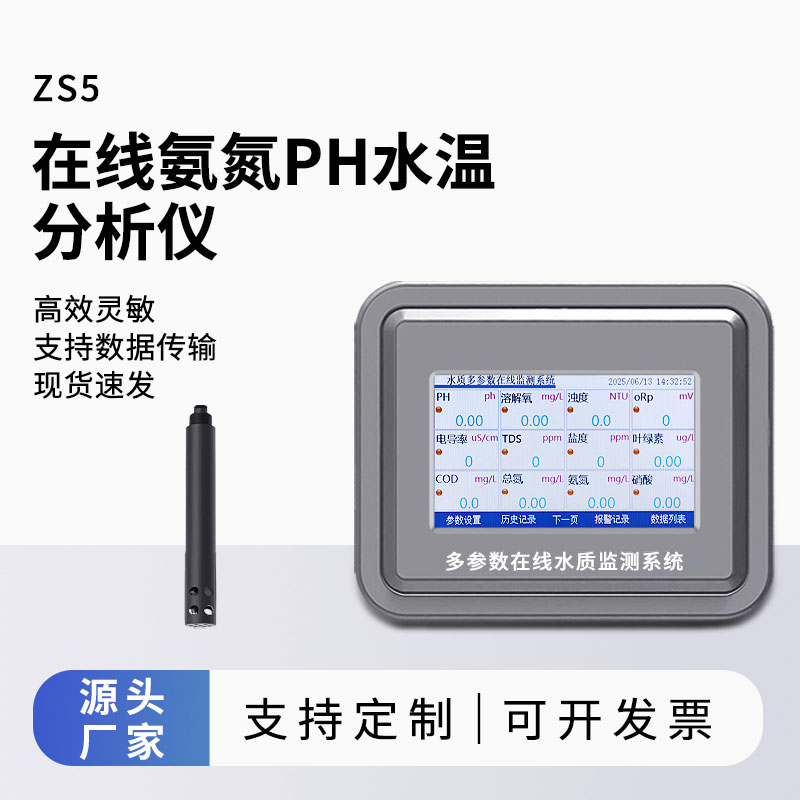

Buoy-based online water quality monitoring equipment is an online monitoring instrument that integrates multi-parameter sensors into a buoy body, capable of real-time measurement of parameters such as water temperature, conductivity, pH, dissolved oxygen, and ammonia nitrogen. It is suitable for unattended water quality monitoring in rivers, lakes, reservoirs, and coastal waters.
Buoy-based online water quality monitoring equipment is a modern instrument for real-time, continuous monitoring of aquatic environments. This device integrates various water quality parameter sensors onto a stable buoy platform, enabling online automatic monitoring of water quality conditions in vast water bodies such as rivers, lakes, reservoirs, and coastal oceans through on-site deployment.
The core monitoring capability of the device lies in its simultaneous measurement of multiple key water quality parameters. Standard monitoring parameters include water temperature, conductivity, pH, dissolved oxygen, and ammonia nitrogen concentration. Water temperature is a fundamental physical indicator affecting the activity of aquatic organisms and the rate of chemical reactions. Conductivity reflects the total ion concentration in the water body and can be used to assess the salinity or mineral content of the water. pH characterizes the acidity and alkalinity of the water body, which is crucial for the health of the aquatic ecosystem. Dissolved oxygen is a key parameter for the survival of aquatic organisms; changes in its concentration directly indicate the pollution and self-purification status of the water body. Ammonia nitrogen is one of the main oxygen-consuming pollutants and eutrophication indicators in water bodies, and its concentration monitoring is of great significance for assessing the degree of organic pollution in the water body. Depending on requirements, the device can also be expanded to integrate sensors for other parameters such as chlorophyll, blue-green algae, turbidity, ORP (oxidation-reduction potential), or nitrates.
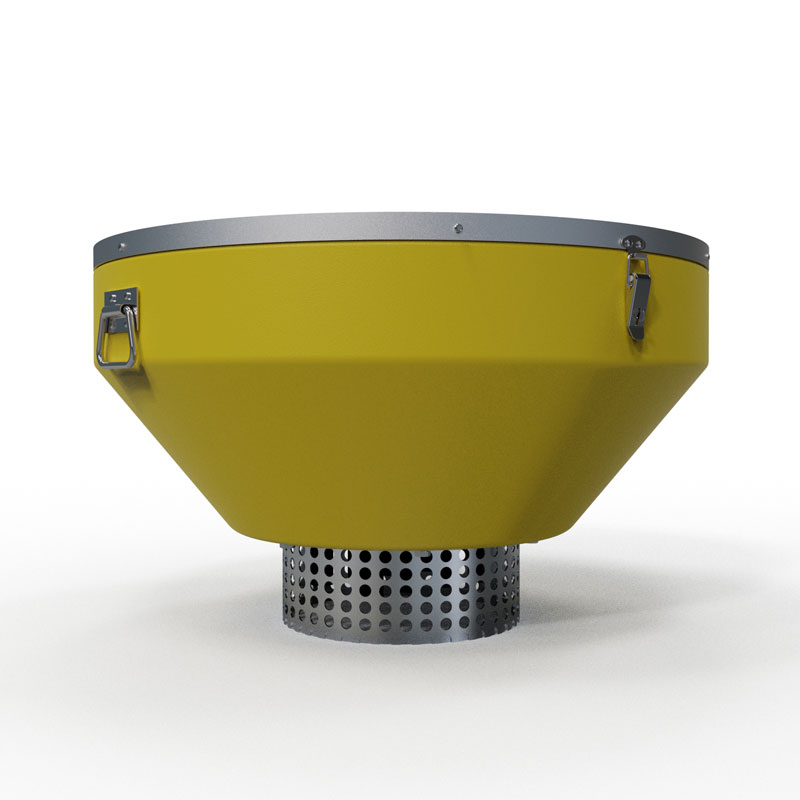
In terms of structural design, the device body is a buoy with good wind and wave resistance. The buoy is usually made of polymer materials and filled with buoyant material, allowing it to float on the water surface for a long time. All water quality sensors are installed in the lower part of the buoy body or extended to a specific depth underwater via a bracket, ensuring that the sensing parts are in direct contact with the water body being measured. The data acquisition and transmission module and power supply system are sealed and installed in a protective compartment on the upper part of the buoy body. The power supply system mostly uses a solar panel combined with a battery to ensure long-term continuous operation of the device under unattended conditions in the field.
The deployment method of this device offers significant advantages. The installation process requires no complex lifting operations or the construction of fixed monitoring stations. The assembled and tested buoy is simply transported to the designated monitoring point by boat and then anchored and deployed. This method significantly reduces installation costs and minimizes disruption to the surrounding environment, allowing for rapid deployment of the equipment in various large or remote water bodies requiring monitoring.
In practical applications, the Buoy-based online water quality monitoring equipment system forms a crucial node in the water quality monitoring network. Through its built-in wireless communication modules (such as 4G/5G, radio, or satellite communication), it periodically transmits real-time collected and processed water quality data to a data platform at a remote monitoring center. Monitoring personnel can remotely track the spatiotemporal dynamics of water quality across large areas. This equipment is widely used in areas such as drinking water source safety early warning, lake and reservoir eutrophication monitoring, river chief system section assessment, aquaculture area environmental monitoring, assessment of wastewater discharge points into rivers and seas, and water environment scientific research. The continuous time-series data it provides helps analyze water quality change patterns, track pollution sources, and provides scientific data support for water environment management and protection decisions.
This paper addresses:https://fengtusz.com/industry/895.html