
Soil moisture conditions refers to the amount and distribution of water content in the soil. It is a core indicator reflecting the degree of soil dryness or wetness, directly related to crop growth, drought and flood disaster early warning, and water resource management efficiency. Professional monitoring equipment can accurately measure the ratio of water content to the soil's maximum water holding capacity, providing a scientific basis for agricultural irrigation and ecological protection.
Soil moisture conditions is an important concept in agricultural meteorology and hydrology, specifically referring to the quantity and distribution of water contained in the soil profile. This indicator not only directly characterizes the degree of soil dryness or wetness but also accurately reflects the actual availability of water for crops through the ratio of water content to the soil's maximum water holding capacity.
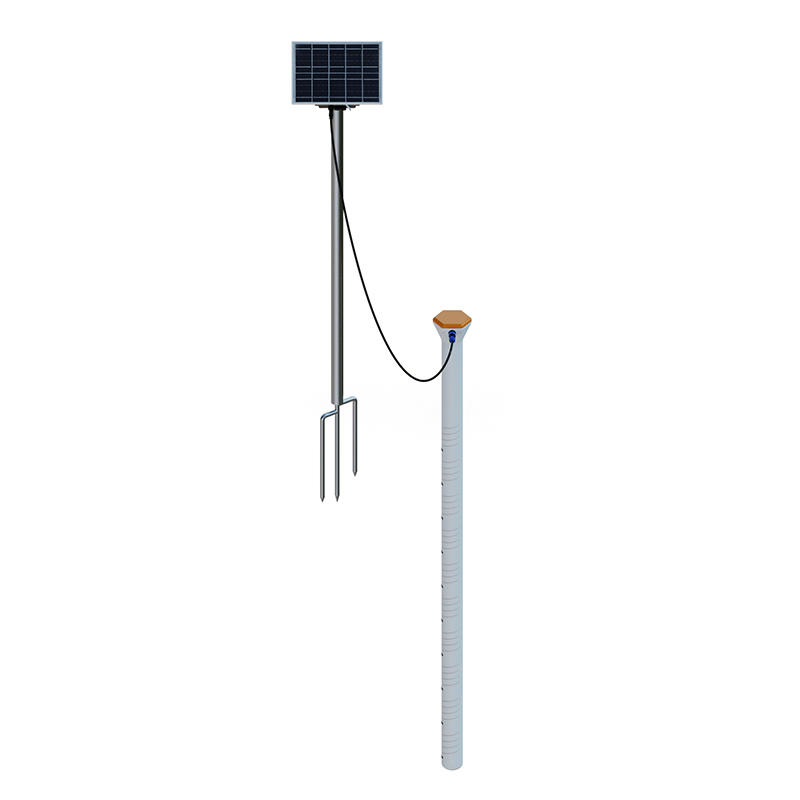
In agricultural production systems, Soil moisture conditions monitoring forms the basis of precision irrigation. By continuously measuring water content at different soil depths, farmers can accurately understand the water supply status in the crop root zone. Typical monitoring systems deploy sensors at key depths such as 10 cm, 20 cm, and 40 cm to obtain Soil moisture conditions data from the main root activity layer. This real-time data provides a direct basis for determining irrigation time and quantity, effectively avoiding water resource waste caused by traditional fixed-cycle irrigation.
Soil moisture conditions monitoring technology has evolved from manual sampling to automatic sensing. Early measurements mainly relied on the soil drying method, which, although highly accurate, was time-consuming and difficult to achieve continuous observation. Modern monitoring generally uses electronic sensing technologies such as time-domain reflectometry and frequency-domain reflectometry, enabling data collection at different soil depths every minute. Some advanced systems also combine the dielectric constant principle, measuring soil electromagnetic properties to infer volumetric water content, with a measurement accuracy of within ±3%.
The application scope of monitoring data has expanded from single agricultural irrigation to multi-field comprehensive services. In disaster prevention and mitigation, continuously low Soil moisture conditions data can serve as an important indicator for drought early warning, while a rapid increase in water content in a short period indicates a potential flood disaster. In the field of water resource management, regional-scale Soil moisture conditions monitoring networks provide decision support for watershed water resource allocation and ecological water distribution, especially in arid and semi-arid regions, where this data directly relates to the formulation and adjustment of irrigation quotas.
Modern Soil moisture conditions monitoring systems typically consist of three parts: field monitoring stations, a data transmission network, and a data center. The monitoring station is equipped with Soil moisture conditions sensors, temperature probes, and a small weather station, transmitting data via GPRS or Beidou satellite. The data center uses specialized software to analyze and process the collected data, generating Soil moisture conditions distribution maps at different spatial and temporal scales, and publishing them to users through a web platform or mobile application.
With the development of precision agriculture technology, monitoring is being deeply integrated with automatic irrigation systems. Some advanced farms have already implemented variable rate irrigation based on real-time Soil moisture conditions data. When the monitored value falls below the threshold suitable for crop growth, the system automatically activates the irrigation equipment until the Soil moisture conditions returns to the optimal state. This closed-loop management approach significantly improves water resource utilization efficiency and provides reliable technical support for sustainable agricultural development.
This paper addresses:https://fengtusz.com/company/894.html