

Product Center
-
Hydrological equipment monitoring station
-
Water Quality Monitor Sensor
-
Plant protection equipment
-
Food Testing Equipment
- Water Quality Buoy Monitoring Stations Enable Automated, Real-Time, In-Situ Monitoring Across Diverse Water Bodies
- Locust Monitoring Equipment Enables Intelligent, Precision Monitoring in Forest and Grassland Areas
- Introduction to Water Quality Online Monitors: Pricing, Features, and Applications
- Soil Moisture Testing Equipment Designed for High-Precision Field Soil Environmental Monitoring
- Water Level Monitoring Device Leverages Microwave Technology for All-Weather Online Hydrological Monitoring
- Practical Application of Agriculture Sensors in Soil Heat Flux Monitoring
Shandong Fengtu IOT Technology Co., Ltd
Sales Manager:Ms. Emily Wang
Tel, Whatsapp:+86 15898932201
Email:info@fengtutec.com
Add:No. 155 Optoelectronic Industry Accelerator, Gaoxin District, Weifang, Shandong, China
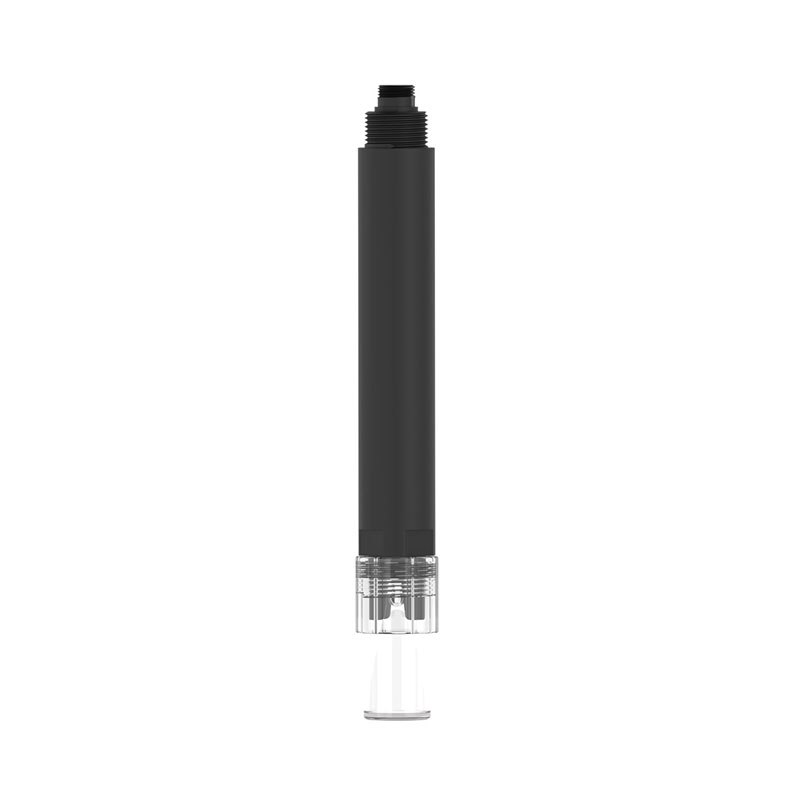
On-line ph sensor
Model:FT-S3
Brand:fengtu
 Get a Free Quote
Related products
Product details
1.On-line ph sensor application environment description
On-line ph sensor is a monitoring instrument for controlling pH value in water quality analysis, for environmental water quality testing, various high/low ion strength water sample testing.Used for environmental water quality testing, various high/low ionic strength water sample testing, and can meet the requirements of most industrial/environmental applications for online pH measurement.
Signal output: RS485 (MODBUS-RTU), 4-20mA current output.
Low impedance sensitive glass film, internal signal isolation technology, strong anti-interference ability.
Good reproducibility, thermal stability, low drift, small size, fast response
Easy and simple installation, 3/4NPT pipe thread, convenient for submerged installation or installation in pipes and tanks, stable performance and long service life
IP68 waterproof standard
2. On-line ph sensor technical parameters
| Measuring principle | Electrochemistry (Salt Bridge) |
| Signal method | RS485 (MODBUS-RTU) |
| Measuring range | 0~14.00(PH) |
| Measurement resolution | 0.01 |
| Measurement accuracy | ±0.1PH, ±0.1℃ |
| Response time | About 10s (98% flowing liquid) About 15s (98% stationary liquid) |
| Shell material | ABS |
| Temperature compensation | Automatic temperature compensation |
| Cable length | Standard 5 meters |
| Supply voltage | 12-24VDC (0.4W@12V) |
| Measurement environment | Temperature 0~50℃ (no freezing), < 0.2MPa |
| Waterproof grade | IP68 |
| Installation | Immersion installation, NPT3/4 thread |
3. On-line ph sensor installation and electrical connection
1. Installation
Note: The sensor cannot be installed upside down or horizontally, but must be installed at an angle of at least 15 degrees.
2. Electrical connection
The cable is a 5-core shielded cable, and the line sequence definition is:
Brown-power line (12~24VDC) Black-ground line (GND)
Green-485B Yellow-485A
The wiring sequence should be carefully checked before powering on to avoid unnecessary losses due to wiring errors.
4. On-line ph sensor maintenance and care
When using the instrument for the first time or after long-term disuse, the sensitive bulb and reference junction should be immersed in 3.3 mol/L KCl solution for more than 2 hours.
When using, it should be washed with deionized water (or distilled water) and wiped dry to prevent impurities from entering the measured liquid. 1/3 of the sensor should be inserted into the measured liquid.
The wiring terminal part should be kept clean and dry. The sensor should be cleaned when not in use and inserted into a protective cover filled with 3.3 mol/L KCI solution, or the sensor should be inserted into a container filled with 3.3 mol/L KCI solution.
Check whether the wiring terminals are dry. If there are stains, wipe them with anhydrous alcohol and continue to use them after they are dry. The sensor should avoid being immersed in deionized water, protein solution, strong acid and alkali solution, and acidic fluoride solution for a long time, and prevent contact with silicone grease. The glass membrane of the sensor that has been used for a long time may become translucent or have sediment. At this time, it can be washed with dilute hydrochloric acid and rinsed with water.
When the sensor has been used for a long time and measurement errors occur, it can be calibrated and corrected by using the instrument. If the sensor cannot be calibrated and measured after the above maintenance and care, it means that the sensor has failed. Please replace the sensor.
This paper addresses:https://www.fengtusz.com/Water-Quality-Sensors/On-line-ph-sensor.html
- Previous Article :Online cod turbidity sensor
- Next Article:online ammonia nitrogen sensor
Related article
-
Remote Rain Level Monitoring for Small and Medium Rivers
2024-09-04 -
Unlocking Solar Panel Integrity: Introducing the Portable EL Detector for Comprehensive Inspection
2024-09-11 -
Measurement Accuracy of Three-Parameter Soil Monitors and Their Application in Smart Agriculture
2026-07-15 -
Soil Moisture Monitor: Precision Monitoring for Efficient Agricultural Water Management
2025-07-15 -
The cost of a smart tea garden monitoring system ranges from 50,000 to 128,000 yuan
2026-06-12 -
Solar-Powered Water Level Monitoring System Utilizes Microwave Radar Technology for Non-Contact Hydrological Observation
2026-04-02 -
Soil Temperature and Moisture Meter Facilitates Precise Soil Environmental Monitoring Across Multiple Industries
2026-08-25 -
GNSS Monitoring Station for High-Precision Slope Displacement and Settlement Monitoring
2025-05-20