
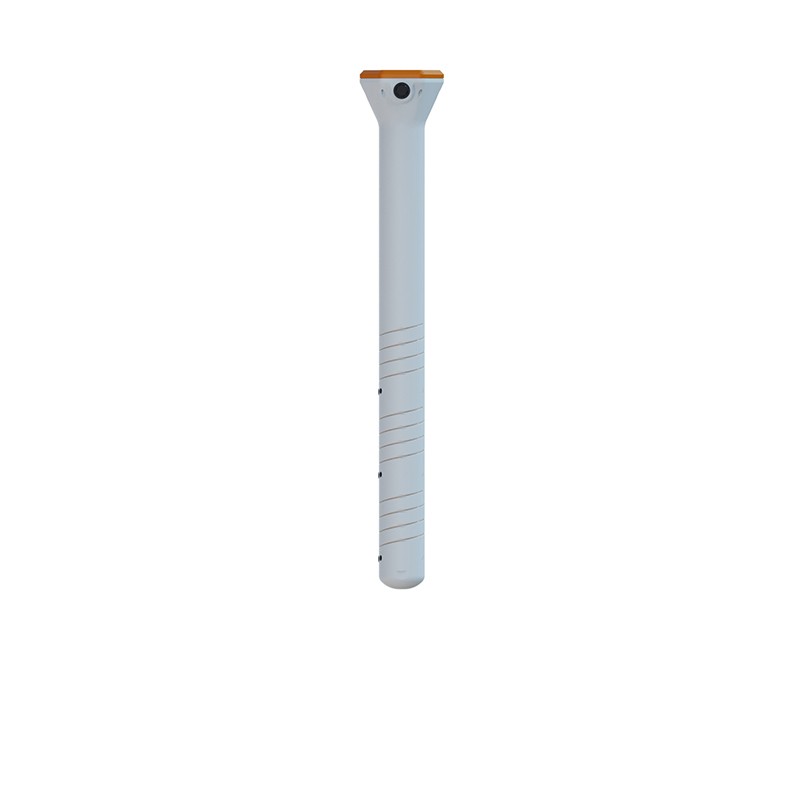
Multi Depth Soil Moisture Probe collects soil volumetric moisture content data using a spiral measuring electrode based on the principle of dielectric constant. It integrates soil temperature, moisture, and conductivity measurements, and can simultaneously monitor parameters across multiple soil profiles. It is widely used in agricultural engineering fields such as smart greenhouses, smart orchards, and smart irrigation.
Multi Depth Soil Moisture Probe is an online monitoring device for monitoring soil profile temperature, soil profile moisture, and soil profile conductivity. The instrument establishes a mathematical model based on the principle of soil dielectric constant and measures soil volumetric moisture content data using a spiral measuring electrode. The sensor has a 60-second startup time, a DC12V power supply, a 22mA power supply, and a total power consumption of only 0.26W, making it suitable for long-term unmanned monitoring scenarios in the field.
In terms of communication, Multi Depth Soil Moisture Probe uses the 485 Modbus RTU protocol for data transmission, with a communication distance of up to 2000 meters, and supports secondary development. Regarding measurement parameters, the soil temperature measurement range is -30 to 70℃, with an accuracy of ±0.3℃ (within the range of -10 to 70℃) and a resolution of 0.01℃; the soil moisture measurement range is 0 to 100%, with an accuracy of ±3% (loam) and a resolution of 0.1%; the soil conductivity measurement range is 0 to 20000 μS/cm, with an accuracy of ±3% (0 to 10000 μS/cm) and ±5% (full range) and a resolution of 1 μS/cm. The instrument can simultaneously measure multiple soil parameters, with three or four layers as standard, and the number of layers can be customized according to requirements for up to ten layers.
Multi Depth Soil Moisture Probe is encased in a PVC plastic tube shell. The internal high-frequency detection wave penetrates the tube wall to sense the soil environment. The electrodes do not directly contact the soil, avoiding electrical interference with the soil and plants. Salt ions, fertilizers, pesticides, and agricultural activities such as irrigation in the soil will not affect the measurement results, ensuring accurate and reliable data. The instrument has an IP67 or IP68 protection rating, allowing for long-term, uninterrupted measurement in fields and soil.
The Multi Depth Soil Moisture Probe sensor can be installed in fields and other environments to automatically monitor soil moisture content and temperature at different depths over extended periods, with a maximum monitoring depth of 2 meters. Installation utilizes a drilling method: after drilling holes with a soil drill, mud is poured into the holes, and the sensor is slowly lowered and rotated to ensure full contact with the soil. The instrument supports multiple power supply options, including solar power, 220V power, and a built-in lithium battery. An optional 4G/5G wireless communication module allows data to be uploaded in real-time to a cloud platform or mobile app, enabling users to view soil moisture data anytime via webpage or mobile device. The Multi Depth Soil Moisture Probe sensor has broad application prospects in agricultural engineering fields such as smart greenhouses, smart orchards, and smart irrigation.
This paper addresses:https://fengtusz.com/industry/1049.html